Breast self-examination only takes a few minutes in front of the mirror, in the shower or in bed in the evening. It’s best to do it regularly, a few days after your period ends. If you don’t menstruate, choose the same day each month. No one knows your body better than you do, so you’re the one most likely to notice if something changes. If you do notice a change, don’t wait – make an appointment with your doctor
Find out how to perform a breast self-examination correctly:
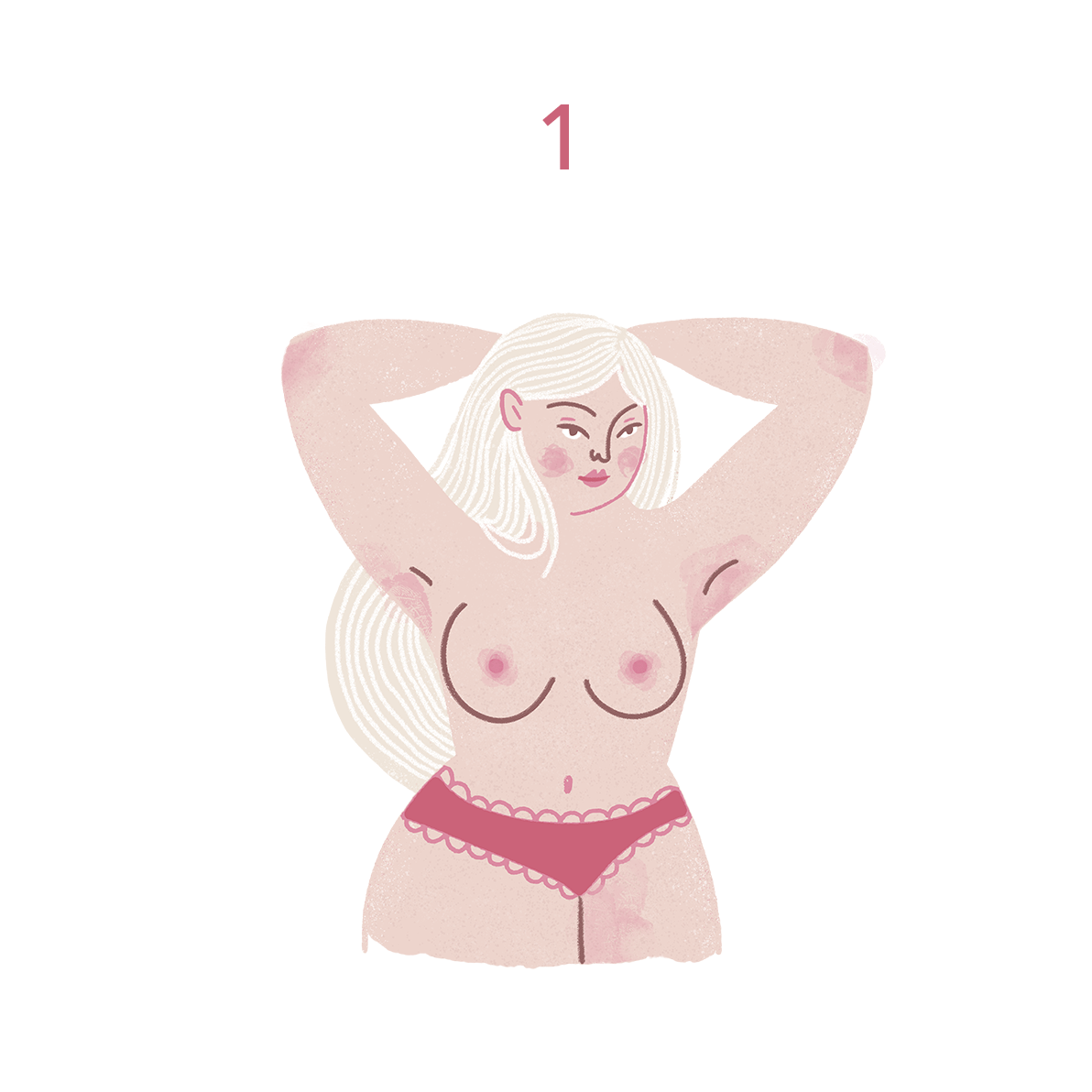
Stand in front of a mirror with your arms raised above your head. Take a close look at your breasts. Do you see anything new?
Look out for changes such as a dimple or indentation, nipple discharge, an inverted nipple, “orange peel” skin, a change in the size or shape of your breast, or an enlarged vein on your breast.
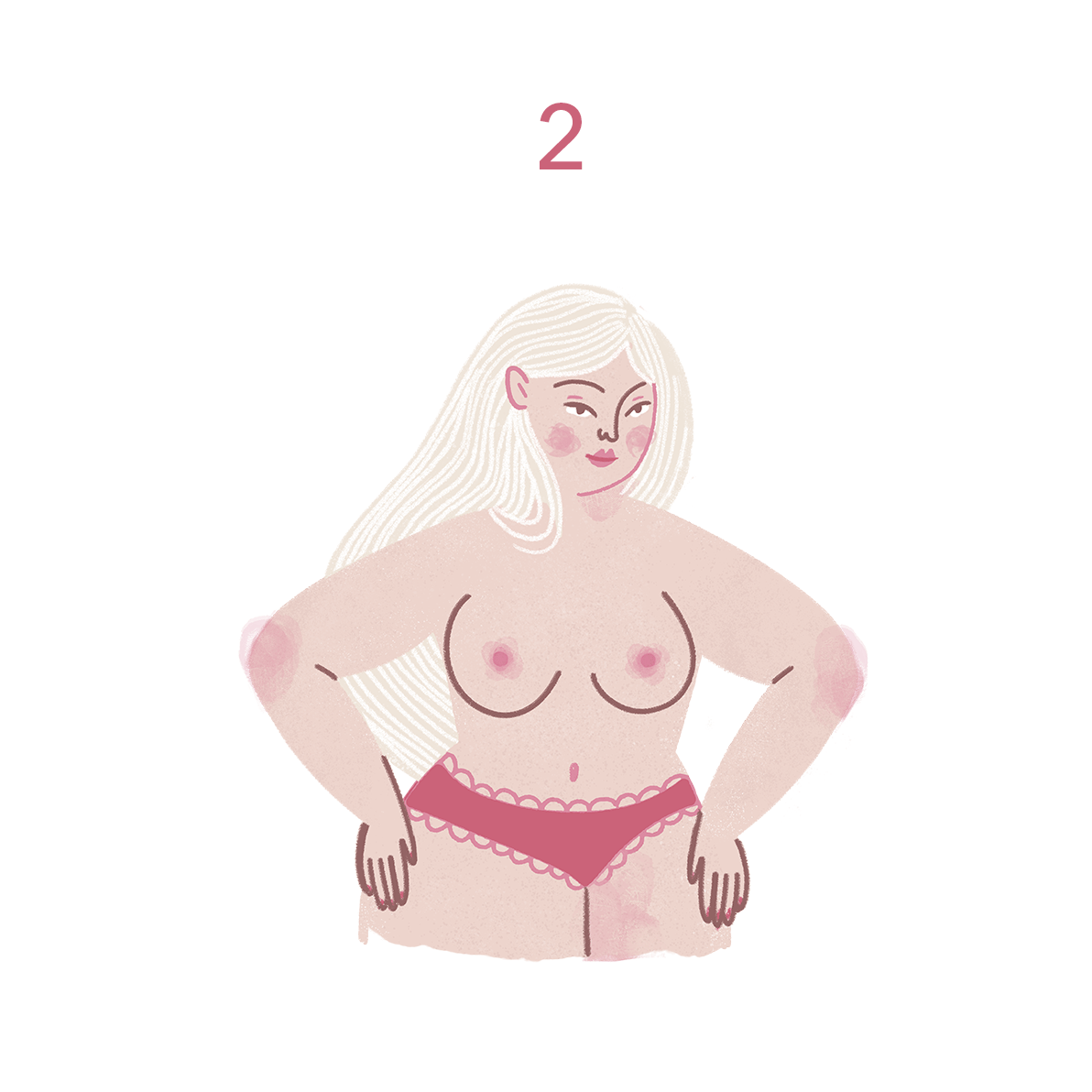
Now place your hands on your hips and take a close look at your breasts in this position. Check whether you notice any of the changes listed in Step 1.
Bring the three middle fingers of your right hand together.
Raise your left arm above your head and use the fingers of your right hand to examine your left breast.
Do this in the following ways:
- using circular movements from the centre of the breast outwards,
- moving up and down across the entire breast,
- using radial movements from the centre of the breast outwards.
Examine the other breast in the same way. Raise your right arm above your head and use the fingers of your left hand to examine your right breast
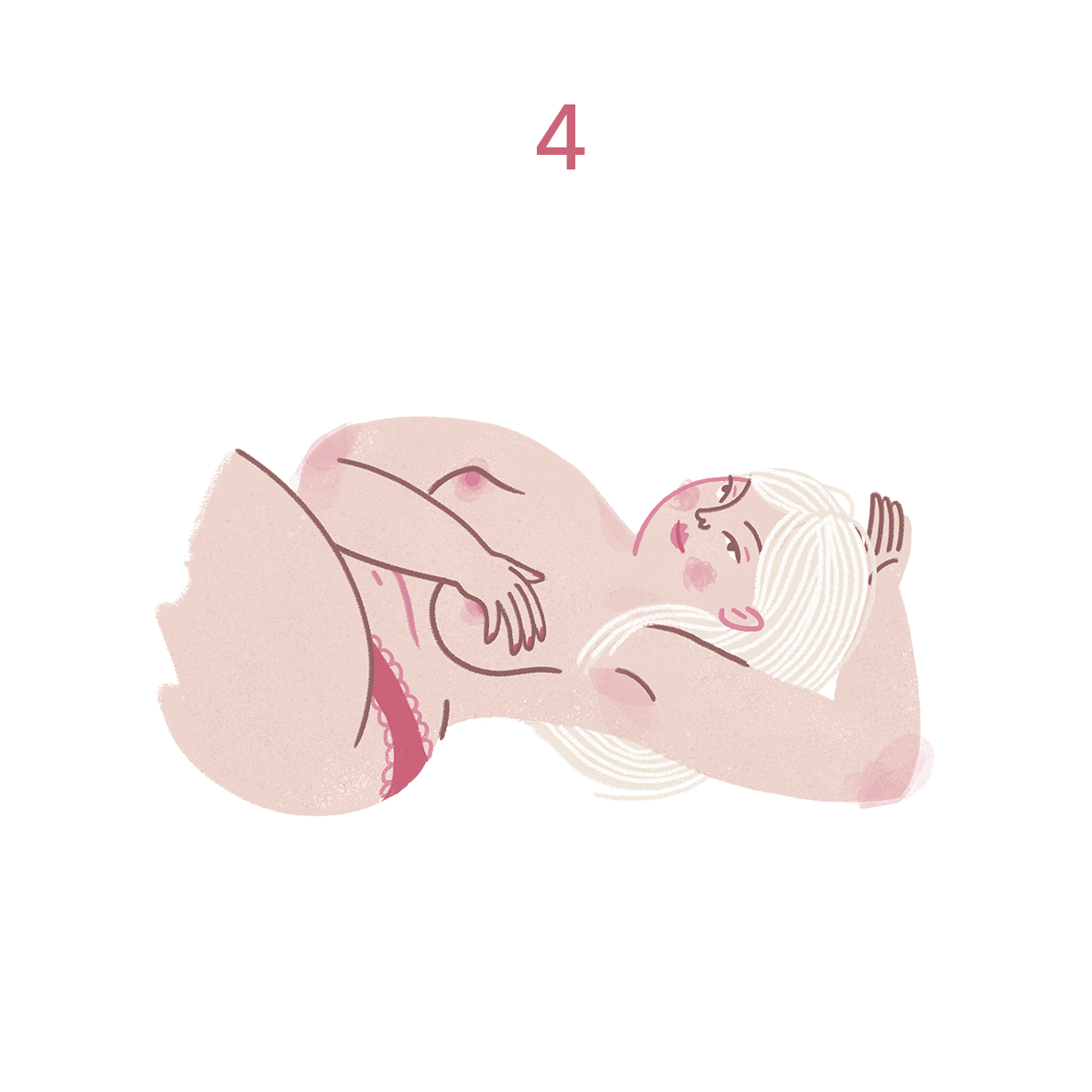
Lie on your back.
Bring the three middle fingers of your left hand together and examine your right breast, then use your right hand to examine your left breast, just as in Step 3.
What symptoms should you look out for?
- nipple discharge
- newly visible or swollen veins
- a dimple or indentation in the breast
- redness of the skin
- skin retraction on the breast
- a protruding lump on the breast
- an inverted nipple or a change in its shape
- a change in the size or shape of the breast
- “orange peel” skin
- ulceration of the breast skin
- crusting or thickening of the nipple
A little reminder:
Breast self-examination is not a substitute for preventive screening, such as breast ultrasound and mammography. Pink October reminds women about preventive screening, but you choose your own month for your check-ups. Every year, no excuses.
CARE bra and briefs
Lingerie, pyjamas and a robe with a hidden message that you put on and then forget about.
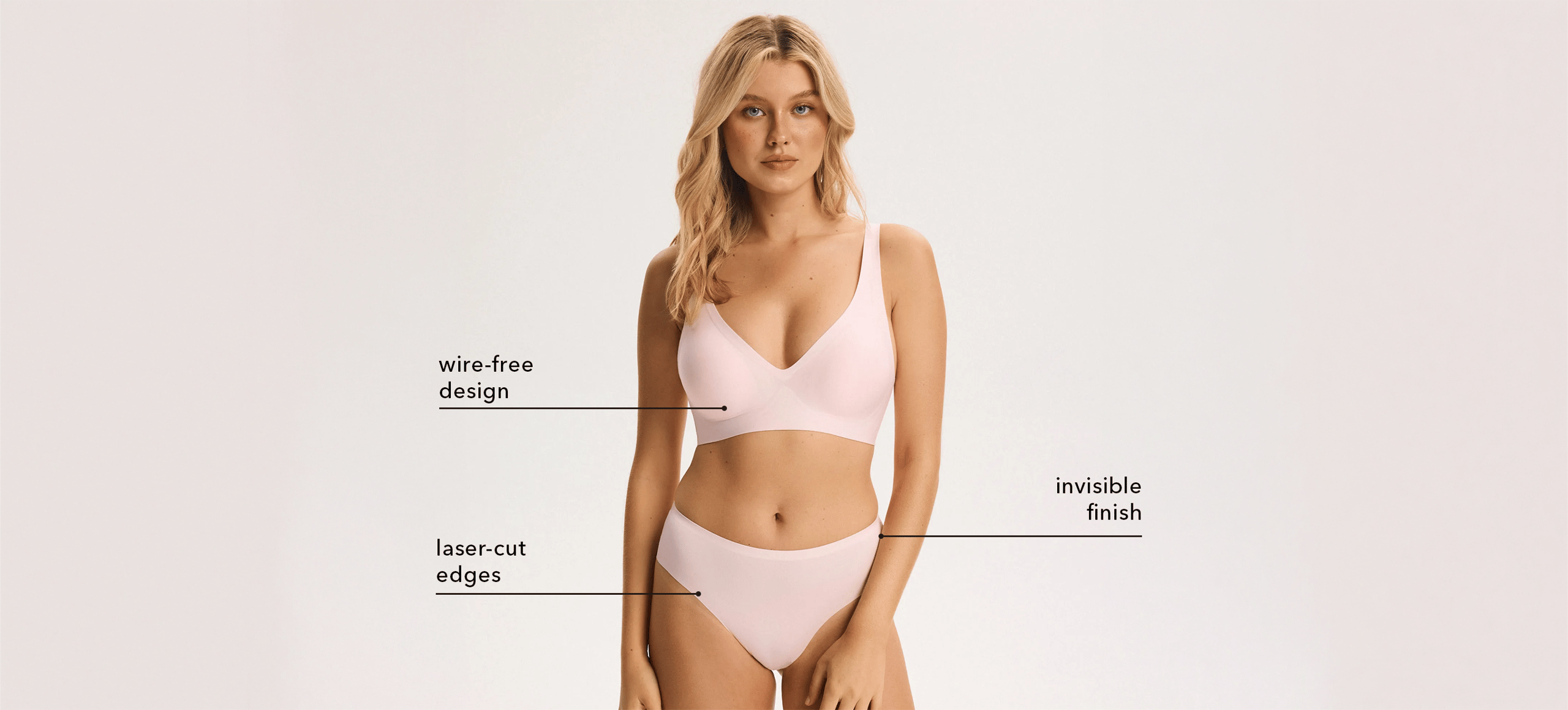






Details that won’t let you forget
Discover the collection dedicated to the Pink October campaign, featuring hidden messages that remind you why breast self-examination is so important.